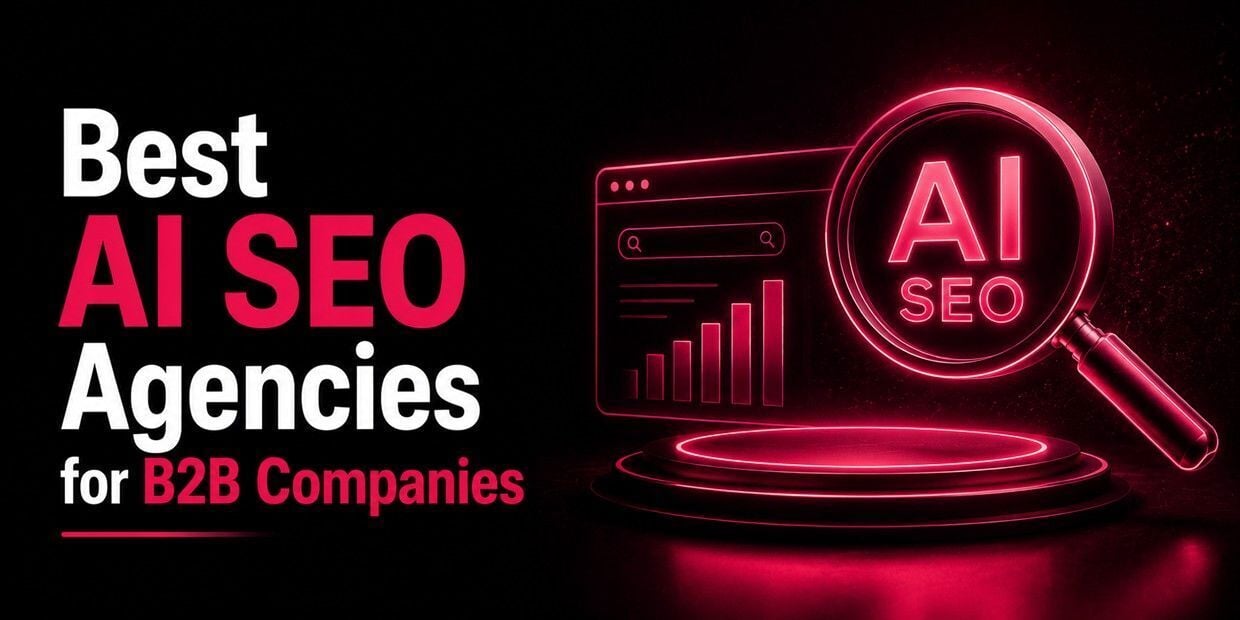


Best AI SEO Agencies for B2B Companies: 2026 Comparison
If your current SEO agency is celebrating a jump in keyword rankings while your organic pipeline is flat, they're optimizing for a game that's already changed. Monthly blog quotas and backlink reports are not part of the 2026 strategy. They're a 2019 strategy with a new invoice date.
This is a no-fluff breakdown of what the best AI SEO agency for B2B actually looks like in 2026, and what separates agencies rebuilding for this era from those retrofitting buzzwords onto old playbooks.
3 Best AI SEO Agencies for B2B in 2026
Revnew — Built for B2B Organic Search in the AI Era
Revnew's differentiation is that they don't treat SEO as a content volume game. Their focus is pipeline alignment; every optimization decision is made with one question in mind: Does this make us more likely to appear when a B2B buyer is evaluating solutions?
Their proprietary "Signal Orchestration" framework maps technical AEO to actual buying committee behavior. The goal isn't traffic. It's citation authority with the AI tools your buyers are already using.
Revnew case study: A mid-market HR tech company came to Revnew after 18 months of traditional B2B SEO services with another agency. Rankings were solid. The pipeline from organic was essentially zero. Revnew audited their entity presence across AI answer engines; they were invisible. Not low-ranked. Absent.
Revnew rebuilt their site architecture for machine readability, restructured their core solution pages around buyer questions rather than features, and built a semantic content cluster that established entity authority in the HR compliance space. Within five months, the client was being cited in Perplexity responses for three of their highest-value buyer queries. Organic-sourced demo requests increased 52%. Rankings barely moved. AI citation share did.
Terakeet — Enterprise Scale, Strong Intent Mapping
Terakeet remains the right call for Fortune 500 B2B brands with massive existing content libraries. Their "Owned Asset Optimization" approach treats every piece of digital real estate strategically.
In 2026, they invested heavily in AI-driven intent mapping, which is useful for large enterprises tracking B2B buyer search-intent shifts at scale. Less suited for growth-stage companies that need pipeline velocity over brand dominance.
Siege Media — Authority Building Through Original Data
Siege Media's 2026 edge is "Information Gain SEO": creating proprietary research and data that AI models must cite because it doesn't exist anywhere else. Strong play for technical SEO for businesses that want to win through thought leadership.
Their visual SEO capabilities also position them well for multimodal AI search. Best for brands playing a long-term authority game, less for teams that need pipeline impact in a defined timeframe.
Agency Comparison at a Glance
|
Agency |
Core Approach |
Best For |
ROI Focus |
|
Revnew |
AEO + Pipeline Alignment |
SaaS, high-growth B2B |
SQLs and Revenue |
|
Terakeet |
Owned Asset Optimization |
Enterprise, Fortune 500 |
Market Share |
|
Siege Media |
Information Gain Content |
Authority-first brands |
Brand Awareness |
|
Victorious |
Performance Technical SEO |
Rankings and traffic lift |
Organic Traffic |
Bottom Line
The Mistake Most B2B Companies Make When Hiring an SEO Agency is:
They check the latest, relevant SEO agency reviews in 2026, based on past performance metrics that no longer reflect buyer behavior. "We ranked 12 clients on Page 1" is a 2022 credential.
The question in 2026 is: how many of those clients are being cited in AI-generated answers for their buyers' actual questions?
Revnew ran this audit for an AI SEO client in the project management space. The client had spent two years building domain authority the traditional way: guest posts, backlinks, keyword-optimized content. Solid fundamentals.
But when Revnew tested their brand presence across 40 buyer queries in ChatGPT and Perplexity, they appeared in exactly four responses. Their top competitor appeared in 31.
The fix wasn't more content. It was restructuring existing content around entity signals and buyer-intent answer formats. Eight weeks later, the number of AI citation responses went from 4 to 19. The domain authority work wasn't wasted; it just needed to be translated into the new language AI models use to evaluate trust.
FAQs
Q: How long does it take to see results from AI SEO for SaaS companies?
Entity-building takes longer than a quick keyword win, typically 90–180 days before meaningful citation share movement. However, once an AI model establishes your brand as a trusted entity in a category, that authority compounds in a way traditional rankings don't. Revnew typically shows initial improvements in citation presence within 60 days and material pipeline impact within a quarter.
Q: How do we measure ROI from AI SEO if traditional traffic metrics don't tell the full story?
Track three things alongside traditional analytics: AI Share of Voice (how often your brand appears in AI-generated answers for target queries), dark funnel attribution (prospects who mention finding you via AI research during discovery calls), and organic-sourced SQL rate, not just traffic volume. The goal is for buyers to show up to sales conversations already having heard of you through AI synthesis.
Worth asking your current agency this week: when was the last time you tested how your brand appears in ChatGPT or Perplexity for your buyers' top questions? If the answer is "we haven't," you have your answer.